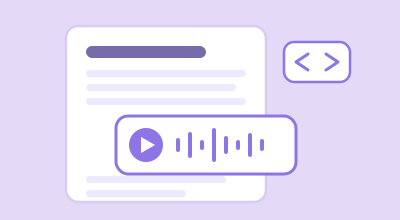
Add a narrated trivia game to any article and turn a finished read into one more interaction.
Generic engagement tools borrow the moment and the data.
A story gets one short session, then the reader moves on.
Polls and quizzes often ignore your beat, your language, and your editorial voice.
Third-party tools measure your audience while giving you only a thin report back.
Turn any story into a playable voice game without adding newsroom workload.
Drop a widget into any article and it builds a game from the page automatically.
Questions, narrated audio, captions, and scoring are generated from your story in four languages.
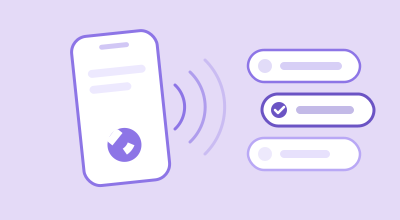
Readers play on the page, continue by phone, or launch from a QR code.
Every play, completion, and topic stays yours as first-party data.
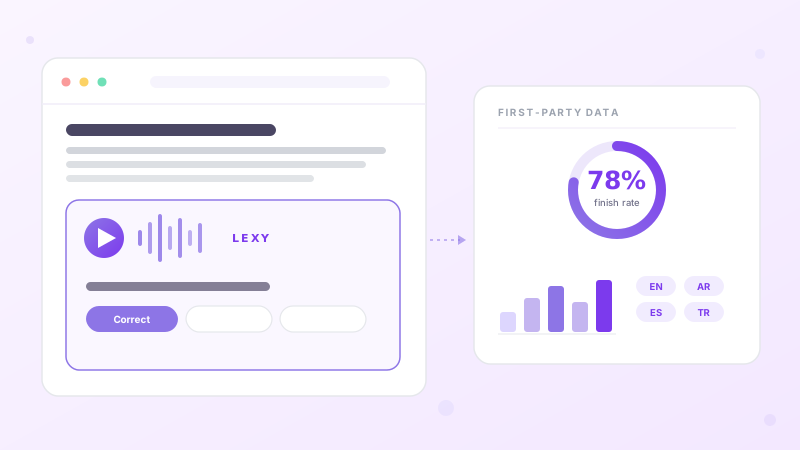
First-party analytics on every widget and every game.
Views, plays, completion and accuracy for every embedded widget, by page and placement.
Per-game performance: which topics land, where players drop off, and what keeps them playing.
Export any view to CSV or PDF for your team, your stakeholders, or your campaign wrap-ups.
Add interactive audio without adding newsroom workload.
Generate a quiz from a story, section, topic, or curated content pool.
Page language, topic, suitability, and context help keep games aligned with the article.
Track views, starts, completion, accuracy, and performance by widget or page.
Drop one script into an article, section, CMS, or campaign page.
Readers can answer in the browser or continue the experience by phone.
English, Spanish, Arabic, and Turkish are supported with native narration and RTL handling.
Turn daily coverage, explainers, and briefs into repeatable voice quiz habits.
A virtual newsroom produces three fresh stories every edition, three times a day, as narrated audio with a short companion quiz, ready to embed.
Add recurring trivia to sports, politics, culture, local news, or explainers.
Readers continue by phone call or on a smart speaker. The same edition, the same host, the same quiz on every surface.
Notes, experiments, and lessons from building voice-first engagement.
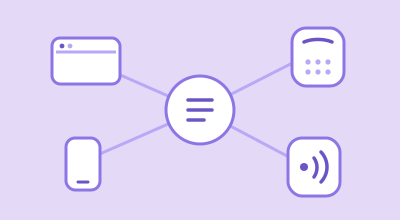
Lexy launched on Alexa without changing the newsroom's routine, because the architecture makes every new platform a rendering problem instead of a rebuild.
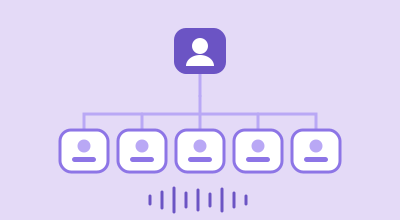
The complete organization chart of the Lexy platform, where the roles the founder once staffed with a real newsroom are now seats held by software.
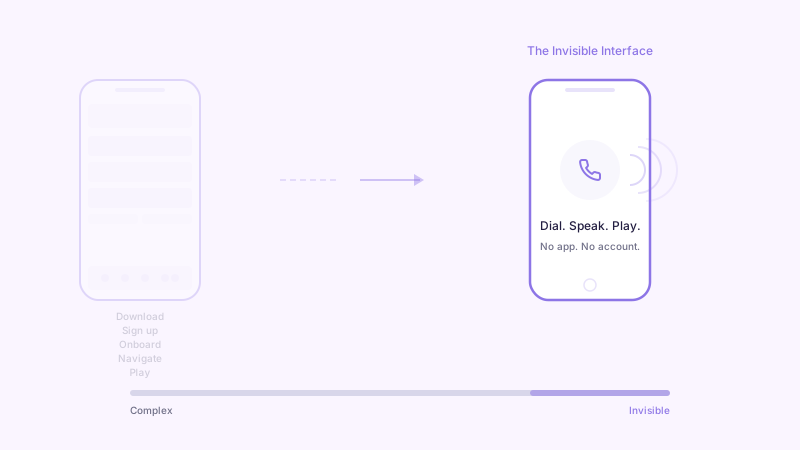
Twenty years of building voice products, from feature phone audio to sensor-driven apps, led to one conclusion: the best interface is the one that disappears.